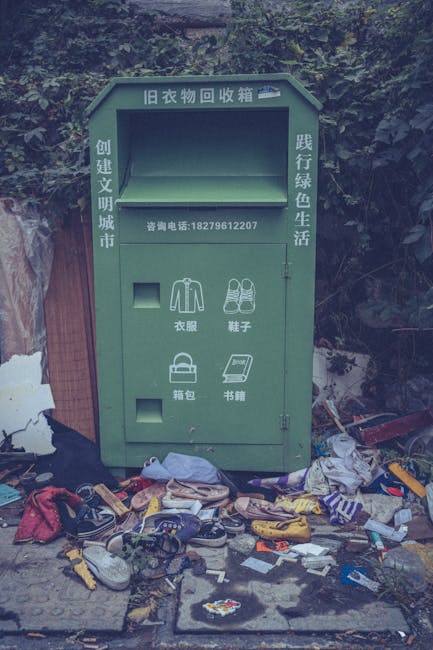
Vauxhall recycling and responsible rubbish removal for donations
If you are clearing a flat, a house, a loft, or even a cluttered office in Vauxhall, the job is rarely just about "getting rid of stuff". The better question is: what can be reused, what should be recycled, and what needs careful disposal so usable items still get a second life through donation? That is where Vauxhall recycling and responsible rubbish removal for donations really matters.
In a busy part of London, where space is tight and schedules are tighter, a sensible clearance plan can save time, reduce waste, and avoid the awkward pile-up of things "for later". It also helps you handle furniture, appliances, and mixed household rubbish in a way that feels properly thought through. Below, you will find a practical guide that explains how the process works, what to keep an eye on, and how to make donation-friendly clearance a lot less stressful.
Table of Contents
- Why Vauxhall recycling and responsible rubbish removal for donations Matters
- How Vauxhall recycling and responsible rubbish removal for donations Works
- Key Benefits and Practical Advantages
- Who This Is For and When It Makes Sense
- Step-by-Step Guidance
- Expert Tips for Better Results
- Common Mistakes to Avoid
- Tools, Resources and Recommendations
- Law, Compliance, Standards, or Best Practice
- Options, Methods, or Comparison Table
- Case Study or Real-World Example
- Practical Checklist
- Conclusion
- Frequently Asked Questions
Why Vauxhall recycling and responsible rubbish removal for donations Matters
Let's face it, a lot of "rubbish" is not rubbish at all. A solid chair, a serviceable table, a box of kitchenware, or a wardrobe with years left in it can often be reused. When those items are sorted carefully, they may be suitable for donation, repair, resale, or recycling instead of going straight to disposal.
That matters for three reasons. First, it reduces the volume of waste leaving your property. Second, it supports a more practical circular approach: items stay in use for longer, which is usually better for both budgets and the environment. Third, it makes the whole clearance feel more intentional. You are not just emptying rooms; you are making decisions about value, condition, and destination.
In Vauxhall, that tends to be especially useful for people moving between flats, renovating, or clearing after a tenancy change. You may have a mix of furniture, packaging, old electronics, and everyday household items. Some will be donation-ready, some recyclable, and some only suitable for disposal. Sorting that mix well is the real skill.
Practical takeaway: the best clearance is not the one that removes the most items fastest; it is the one that handles each item in the right way, with the least avoidable waste.
There is also a human side to it. When someone is downsizing after years in the same place, for example, a room full of objects can feel surprisingly emotional. Good rubbish removal should respect that. A careful, orderly approach makes it easier to decide what to pass on, what to keep, and what can go.
How Vauxhall recycling and responsible rubbish removal for donations Works
The process usually begins with sorting, not lifting. That sounds obvious, but people often skip it. A quick assessment of what is reusable, recyclable, bulky, or hazardous can make the entire job smoother. From there, items are grouped into clear streams: donation, recycling, reuse, and disposal.
Donation-worthy items are usually those that are clean, complete, and in working order. Think of a sofa without major damage, a dining table with solid legs, or a chest of drawers that still opens properly. Recyclable items might include certain metals, cardboard, clean wood, or specific electricals, depending on condition and local handling rules. Disposal is for the items that simply cannot be reused safely or practically.
A responsible clearance team will generally look at access too. In Vauxhall, that may mean stair-only flats, shared entrances, limited parking, or tight loading spots. Those practical details shape how the job is done. You do not want a plan that looks fine on paper and then falls apart in a fourth-floor walk-up with no lift. Been there, done that, no one enjoys it.
If the job involves furniture, it is worth looking at furniture clearance and furniture disposal options alongside broader rubbish removal. That gives you a clearer route for items that can be donated and items that have reached the end of the line.
For larger mixed clearances, people often combine this approach with home clearance, house clearance, or flat clearance depending on the property type. The point is to keep the workflow simple and sorted from the start.
What usually happens during the job
- Items are checked for donation potential and general condition.
- Reusable goods are separated from mixed waste.
- Recyclable materials are grouped where possible.
- Bulky rubbish is loaded safely, with care around walls, stairwells, and communal areas.
- Anything unsuitable for donation or recycling is taken away through the correct waste route.
That sounds straightforward, but the value is in the detail. A good team will ask the awkward questions early: Is the sofa stain-free enough for reuse? Is the fridge still working? Is the box of clothes actually donation-ready, or just "too good to bin" in theory? Those little decisions matter more than people expect.
Key Benefits and Practical Advantages
The obvious benefit is less waste. But there is more to it than that. A donation-focused clearance can reduce pressure on you during a move, cut down the number of separate trips you need to make, and make the whole process feel more manageable. That alone is worth something when your week is already full.
Another advantage is better use of space. Instead of leaving "maybe useful" items stacked in hallways or corners, you clear with a plan. That tends to make properties easier to clean, photograph, renovate, or hand over. Landlords and tenants both notice the difference, and so do families when a home has been lived in for a long time.
It can also improve cost efficiency. If items are handled properly for recycling or donation, you are less likely to pay for unnecessary disposal of things that still have value. In practical terms, separating reusable items from mixed waste often makes the job easier to plan and easier to explain. You know where things are going. No mystery bags. No last-minute panic.
For business premises, the logic is similar. If you are clearing an office, charity-friendly and recycling-led handling can be more orderly than throwing everything into one pile. A business looking at office clearance or business waste removal may also want to separate reusable desks, chairs, shelving, or archive furniture before the waste leaves the building.
| Approach | Best for | What happens to usable items | Main downside |
|---|---|---|---|
| General disposal only | Fast removal of unwanted items | Usually mixed in with waste | Wastes reuse value |
| Recycling-led clearance | Mixed items with some recyclable material | Separated where practical | Needs more sorting |
| Donation-focused clearance | Good-quality furniture and household goods | Set aside for reuse or donation | Not every item qualifies |
| Combined clearance plan | Most homes and flats | Reusable, recyclable, and waste streams handled separately | Requires clear planning |
To be fair, the best option is often the combined one. Most properties in Vauxhall do not contain only one category of item. They contain a bit of everything, which is exactly why a measured approach usually works best.
Who This Is For and When It Makes Sense
This approach is useful for people in all sorts of situations. You may be moving out of a flat and realising your old sofa is not coming with you. You may be helping a relative downsize and want their belongings treated respectfully. You may run a small office that needs clearing without creating a mountain of unnecessary waste. Or you might simply be doing a long-overdue reset after a hectic few years. Honestly, plenty of people reach that point.
It makes sense when you have:
- furniture that is still usable but no longer needed
- mixed household items and general rubbish in one place
- a property that needs to be emptied quickly and tidily
- items that may be suitable for donation or recycling
- limited time, access, or storage space
It is also a strong option if you are managing a sensitive clearance, such as a bereavement or a long-term hoarded property. In those cases, the process should be calm, steady, and non-judgemental. You do not need dramatic language; you need steady hands and a sensible plan.
People often think a donation-led clearance is only for "nice" items. Not really. It is more about usefulness and condition than perfection. A slightly scuffed table may still be perfectly usable, whereas a beautiful-looking chair with a broken frame is not. The same logic applies to appliances, books, kitchenware, and textiles.
If the clearance covers awkward spaces like a loft, garage, or a heavily stored room, the right starting point can be a dedicated loft clearance or garage clearance. Those spaces tend to hide the most surprises, don't they?
Step-by-Step Guidance
If you want the process to run smoothly, the trick is to prepare before anything is carried downstairs. Here is a practical sequence that works well in most real-world clearances.
1. Separate the obvious donation items
Walk through each room and pull out anything that is clearly reusable. Keep it simple. If an item is complete, clean, and safe, it may be worth donation or reuse. If not, it probably belongs elsewhere.
2. Group recyclable materials
Cardboard, clean metal, and some electronics may need separate handling. Do not overcomplicate it, but do not mix everything together either. A few minutes of sorting can save a lot of confusion later.
3. Identify bulky waste early
Mattresses, sofas, wardrobes, filing cabinets, and similar items can shape the whole clearance plan. They are heavy, awkward, and usually the first things to cause bottlenecks. Make them visible early so they do not ambush you on the day.
4. Flag anything fragile, hazardous, or uncertain
Old paint, sharp objects, loose glass, and damaged electronics need careful handling. If you are not sure about an item, set it aside and ask before it is moved. That small pause is worth it.
5. Plan access and parking
In a place like Vauxhall, access matters as much as sorting. Check lifts, stairwells, loading points, entry codes, and time restrictions. If the route from the front door to the vehicle is awkward, say so upfront. It saves stress on the day.
6. Confirm where each item stream is going
Donation, recycling, and disposal should not blur into one another. A responsible clearance is transparent about destination and handling, even if the final mix depends on the condition of the items.
7. Finish with a final sweep
Once the main clearance is complete, do a last room-by-room check. Cupboards, under-bed spaces, sideboards, and loft corners are where forgotten bits often hide. That last sweep is strangely satisfying. You know the one.
If you need a service that can handle mixed loads beyond furniture, a broader waste removal approach can be a practical fit for everyday junk, bagged rubbish, and mixed non-hazardous waste.
Expert Tips for Better Results
First, think in categories, not just in piles. "Keep", "donate", "recycle", and "remove" is a better mental model than "stuff over there". It is less glamorous, admittedly, but it works.
Second, remove sentimental decisions from the practical pass. If you start debating every object, the job slows down fast. Make the first pass about condition and usability. You can always revisit personal items later.
Third, photograph unclear items before clearing them. A quick image can help if you need to ask whether something should be donated, repaired, or recycled. Useful for offices too, especially where desks and storage units look nearly new but need a proper check.
Fourth, be honest about the condition of upholstered furniture. Sofas and armchairs can look fine from across the room and still be unsuitable for donation if they are badly stained, torn, damp, or structurally unsafe. That is one of those annoying truths, but there it is.
Fifth, use the clearance to reset the property properly. If you are having a house clearance or a full home clearance, combine it with cleaning, repair, or decoration schedules. Doing things in the right order saves repeat labour later.
Finally, keep expectations realistic. Not every item can be donated, and not every item can be recycled in the way people imagine. A careful team will be clear about that, which is better than vague promises. Clear, honest, no fuss.
Common Mistakes to Avoid
One of the most common mistakes is treating every usable-looking item as donation-ready without checking condition. A broken chair with a missing leg is not a donation, however noble the intention. Another mistake is leaving all decisions until the van arrives. That tends to create delays and a bit of low-level chaos, which nobody needs on a Tuesday morning.
People also underestimate access problems. A corridor full of boxes, a blocked stairway, or a parking issue can turn a straightforward clearance into a slow one. If you are in a flat, be extra careful with timing and lift access.
Then there is the classic mixed-waste mistake: putting everything together and hoping it can be sorted later. Sometimes it can be; sometimes it cannot. The cleaner the separation at source, the better.
- Do not store damp items with clean reusable items.
- Do not leave batteries, sharp objects, or broken glass mixed into general rubbish.
- Do not assume all electricals are suitable for donation.
- Do not forget about cupboards, sheds, under-stair spaces, and loft corners.
- Do not book a one-size-fits-all clearance if the job includes furniture, waste, and donation items.
A smaller but important mistake is failing to ask about the company's handling standards. If you are booking a clearance service, it is fair to ask how they separate reusable items and what happens to them next. Good operators should be able to explain this in plain English.
Tools, Resources and Recommendations
You do not need a van full of specialist equipment to start well. Most of the work comes down to organisation. Still, a few practical tools help more than people expect.
- Heavy-duty bags and boxes: useful for sorting small items and keeping categories separate.
- Labels or marker pens: simple, but very effective for marking donation, recycling, or disposal groups.
- Gloves: especially for lofts, garages, and dusty storage spaces.
- Measuring tape: handy if you are deciding whether furniture can be reused or moved safely.
- Phone camera: ideal for checking items you are unsure about.
As for services and support, it helps to look at the company's published approach to sustainability and safety. For example, recycling and sustainability information can tell you a lot about whether the business thinks carefully about waste streams, not just volume.
You may also want to review practical details around pricing and quotes before booking, especially if your clearance includes mixed furniture, a few bulky items, or access that might take extra time. Transparent quoting makes the whole thing calmer.
For trust and reassurance, it is worth checking the business's published notes on health and safety, insurance and safety, and about us. These pages are not just formalities; they help you understand how the company works and how seriously it treats your property.
Law, Compliance, Standards, or Best Practice
For rubbish removal and donation-led clearance in the UK, the safest approach is to work to recognised best practice and to treat waste responsibly from the outset. That includes using properly documented waste handling, being careful with anything potentially hazardous, and separating reusable goods from genuine refuse where practical.
It is also wise to remember that duty of care matters. In plain terms, if you arrange for waste to be removed, you should know it is being handled by a legitimate operator who understands how to manage it properly. You do not need to be a waste expert yourself, but you should expect clear communication and sensible handling.
Donation items deserve a bit of extra care. If something is going to be passed on for reuse, it should be clean, safe, and suitable for the next person. That is both common sense and basic good practice. Nobody wants a donated item that creates a problem instead of solving one.
For homes, flats, and small businesses, the practical standard is straightforward:
- separate reusable items from waste where possible
- do not mix hazardous or sharp materials with general rubbish
- be transparent about item condition
- use suitable handling for bulky or heavy objects
- keep records or notes if needed for business or tenancy purposes
Some readers ask whether "responsible" means more paperwork or more complication. Not necessarily. Usually it just means making better decisions earlier. Simple, really.
Options, Methods, or Comparison Table
There is more than one way to clear a property responsibly. The right choice depends on how many items you have, how much sorting you can do yourself, and whether access is straightforward.
| Method | Good for | Pros | Watch-outs |
|---|---|---|---|
| Self-sorting and multiple trips | Small loads and a flexible schedule | Maximum control over each item | Time-consuming, tiring, awkward for bulky items |
| One-off mixed clearance | Quick property emptying | Fast and simple | Reusable items may be missed if not sorted first |
| Donation-first clearance | Good furniture and household goods | Supports reuse and reduces waste | Not everything qualifies for donation |
| Combined clearance with recycling and waste separation | Most homes, flats, and offices | Balanced, practical, and usually efficient | Needs clear communication and planning |
In most cases, the combined approach is the smartest. It gives you room for donation, handles recycling properly, and still gets the property cleared without dragging the process out. A bit of structure goes a long way.
Case Study or Real-World Example
Picture a typical Vauxhall flat after a tenancy ends. There is a two-seater sofa in decent condition, a dining table with matching chairs, a broken bedside cabinet, several bags of mixed household rubbish, and a few boxes of books, clothes, and kitchen bits. The hallway is narrow, the lift is small, and the parking outside is not exactly generous.
In a rushed clearance, all of that might end up in one load. But a more careful approach would split it up. The sofa and table could be checked for donation suitability. The books and kitchenware might be sorted for reuse or recycling. The broken cabinet, damaged packaging, and general rubbish would be taken away through the appropriate waste route. Simple in theory, but very effective in practice.
What changed the outcome? A short pre-sort, a clear decision on condition, and a plan for moving items out safely. Nothing dramatic. No magic. Just sensible work done in the right order.
A similar pattern shows up in offices too. A small team moving out may have perfectly usable desks, chairs, and storage units alongside old paperwork and broken fittings. If the reusable items are separated early, the result is cleaner, easier to manage, and usually more economical. That is why responsible rubbish removal is often less about disposal and more about sorting well.
And yes, the mood of a property changes once the clutter is gone. Rooms feel lighter, sound changes a little, and the place starts to breathe again. You notice it, even if you did not expect to.
Practical Checklist
Use this checklist before the clearance begins. It helps prevent the usual last-minute scramble.
- Have I separated donation-ready items from general rubbish?
- Are all reusable items clean, safe, and complete?
- Have I set aside anything fragile, sharp, or questionable?
- Do I know which furniture items are being cleared?
- Have I checked lofts, cupboards, sheds, under stairs, and storage corners?
- Is access clear for lifting and loading?
- Have I identified parking or timing restrictions?
- Do I know whether the job is a home, flat, office, or mixed clearance?
- Have I asked how recyclable and donation items will be handled?
- Have I reviewed the company's safety and pricing information?
If you are looking for a more structured clear-out, a furniture clearance plan can be a useful starting point for bulky items, while a broader clearance may suit mixed household contents better.
Quick summary: sort early, keep donation items clean and safe, separate recyclable materials where possible, and make sure the removal plan fits the property rather than forcing the property to fit the plan.
Conclusion
Vauxhall recycling and responsible rubbish removal for donations is really about making good decisions under pressure. When you sort items carefully, separate what can be reused, and handle waste properly, the whole process becomes more efficient, less wasteful, and far less stressful. That applies whether you are clearing a flat, a family home, a loft, or a workplace.
The best results usually come from a calm, practical approach: check condition, plan access, keep reusable items apart, and choose a clearance method that fits the real situation. Not the ideal situation. The real one. That difference matters more than people think.
If you are ready to clear space with less mess and more confidence, compare your options, ask the sensible questions, and choose the route that treats donations, recycling, and disposal with equal care. A tidy property is nice. A tidy conscience is better.
Get a free quote today and see how much you can save.
And when the last box is gone and the room is quiet again, that little bit of breathing space can feel like a fresh start.
Frequently Asked Questions
What does responsible rubbish removal for donations actually mean?
It means sorting items so reusable goods can be donated or passed on, recyclable materials are separated where possible, and only genuine waste is disposed of. The aim is to avoid sending everything to the same destination.
Can furniture be donated during a clearance in Vauxhall?
Often yes, if it is clean, safe, complete, and in good enough condition for reuse. Stained, damaged, or unstable furniture usually will not be suitable.
What items are usually best for donation?
Items like decent furniture, usable kitchenware, books, textiles, and working household goods are common candidates. The key is condition. If it is worn out or unsafe, it probably should not be donated.
How is recycling different from donation?
Donation keeps an item in use. Recycling processes the material so it can be turned into something else. A chair might be donated if it is still useful; if not, parts of it may be recyclable depending on the materials.
Is it cheaper to separate donation items first?
It can be, because separating reusable items may reduce the amount of mixed waste that needs disposal. That said, overall cost depends on volume, access, item type, and how much sorting is needed.
What if I am clearing a flat with no lift?
That is common in London and should be planned for from the start. A stair-only clearance may take longer and require more care, especially with bulky furniture. It is better to flag it early than to improvise on the day.
Can electronics be donated too?
Sometimes, if they are working and safe to use. If not, they may need recycling through an appropriate route. Damaged electrical items should never be treated as ordinary donation goods.
What should I do with items I am unsure about?
Set them aside and ask for advice before the clearance happens. Unsure items often include old appliances, upholstered furniture, and anything that looks usable at first glance but has hidden damage.
Do I need to sort everything before the team arrives?
You do not need to complete the whole job yourself, but a basic pre-sort helps a lot. Separating obvious donation items, bulky waste, and hazardous bits saves time and reduces mistakes.
How do I know the removal is being done responsibly?
Look for clear explanations about recycling, donation handling, safety, and pricing. A trustworthy provider should be able to explain its process plainly and avoid vague promises.
Is this approach useful for offices as well as homes?
Yes. Offices often have desks, chairs, storage, and mixed waste that can be sorted more responsibly. A donation-and-recycling-first approach is often very practical for business clearances too.
What is the main mistake people make with donation-led clearances?
The biggest mistake is assuming everything that looks usable is donation-ready. Condition, safety, and completeness matter. A quick, honest check saves trouble later.